
kill_the_netUpload files...
Business Archives - Page 7 of 8 - MCI Group
Social Media For Business: The 9 Biggest Mistakes To Avoid

Social Media For Business: The 9 Biggest Mistakes To Avoid

Having a well-planned and targeted social media marketing strategy for your business is an important and efficient way to broaden your reach, showcase your brand, capture new customers, and strengthen your position in a competitive marketplace. There is, however, a risk that, if you don’t know what you’re doing at every turn, you may be making some common social media marketing mistakes.

Social media mistakes can impact negatively on your business and your brand identity in a number of ways. When used well, social media channels are primed for delivering marketing success, yet errors in social media judgement can damage your brand image, integrity, and reach; you may lose followers and customers, and consumer goodwill towards your business may be affected.

By understanding what some of the most common social media mistakes are, you are halfway to avoiding making them yourself.

The most common social media marketing mistakes

1. Failure to have a social media marketing strategy

Consumers today expect social to be part of their buyer experience. This can be in the form of having a brand social media profile to follow, sharing purchases and aspirational items, checking in and interacting with your brand socially to build relationships and loyalty.

In this way, social media is the current big thing in marketing a business; it has by far overtaken more traditional advertising channels and while these still have their place, to fail to have a social strategy for your business is, at the risk of sounding cliché, to plan to fail.

That being said, remember that there is a vast array of social media channels out there. Not all of these are going to complement your business and your brand. You don’t need to have a presence on every single one! Consider who you are, your brand identity, and also the identity of your target consumer. Which social platforms are they most likely to use? Which social platforms offer the best fit for your brand? You need to build relationships with the right consumer base – so think carefully about who your target audience is and where to best place your attention on social media marketing efforts.

2. Having a single plan across different social platforms

All social platforms do not have a “one size fits all” style, and to approach your campaigns across different platforms in this way will not work optimally. Your approach to Facebook will need to differ from that on Twitter, and Instagram, LinkedIn, and Google+ will all require targeted content based on each channel and its general audience. This is another reason to be very selective and aim for one or two social channels as opposed to having a wider presence across many.

3. Talking AT rather than WITH your audience

Social media is not a television, a radio, or a newspaper. It is not a place to broadcast at your audience. On the contrary, “social” is the operative word. Social media is about two-way conversations; by encouraging consumer interaction you will build better and more rewarding relationships on all sides.

The best social conversations are created when you are not simply broadcasting your brand and taking a “sales pitch” approach. Keep direct selling posts to no more than 20 to 30 per cent of your total content. Offer valuable, sharable, fun, informative and interesting content the rest of the time – as this is what is most likely to achieve engagement and be shared widely.

4. Being impersonal

By creating a personal connection with your followers via your social profile, you will encourage and achieve stronger customer loyalty and relationships and a greater return on your investment in social media marketing. Loyalty translates to sales.

Converse with your followers on your profile in the first and second person; that is, “I”, “we”, “you”. Offer discounts and access to news and special events so that your followers and customers feel like they are important to you.

5. Believing that quantity is more important than quality

This relates to follower numbers. Acquiring new followers is crucial – but the quality of followers you capture is far more important that the raw number of followers if those followers are unlikely to become active customers for your business. Consider then number of Facebook or Twitter profiles out there that have vast numbers of followers: In many cases, these followers are not organic but instead paid for and in some cases are not even real people. These numbers might look nice on a profile page, but at the end of the day, they mean nothing.

Additionally, too many social media marketers make the mistake of focusing entirely on gathering more followers, as opposed to retaining those followers and customers they already have. A new fan on Facebook, for example, may well become a paying customer, yet a new follower who is an existing customer is far more likely to become a repeat customer. And a follower who, for any reason, chooses to unfollow your social profile is less likely to shop with your business in future.

6. Posting too much or not enough

Too many posts can clog followers’ newsfeeds and this quickly becomes annoying to many social media users. It can result in unliking and unfollowing on a fan’s part. Conversely, not posting often enough suggests apathy on your part and you will not retain followers – social media by its nature promotes a short attention span and people will move on very quickly.

Listen to your target audience. Post content that is relevant to them and their interests, as well as to your brand in some way, ideally triggering a conversation as well as shares. Aim for two or three posts a day at most, but no less than one a day.

7. Poor response to negative commentary

Always respond to your followers in a timely manner. Think of it as customer service. This includes when, inevitably, a negative comment is posted. Sometimes there may be a valid reason for complaint (we are all human); other times, it’s a matter of the fact that some people simply like to complain. Never delete or ignore a negative comment. Apologise quickly, calmly, and politely (remember “the customer is always right” – even when they are not) and offer private means of contact directly to resolve the issue. For most consumers, acknowledgement that they have been heard is all it takes to turn a negative into a positive.

8. Inserting yourself where you don’t belong

Don’t insert yourself into a trending topic unless you offer value and relevance. People and businesses who steal mindshare on news items, natural or human-triggered disasters, or another’s showcase appear ignorant, insensitive and even narcissistic – it’s not a good look for you or your business.

9. Hashtag overuse

It’s simple. Use relevant hashtags to your business, brand, and post content. Use no more than a few hashtags per post. Keep them concise. Hashtags are there to engage with a particular demographic in a particular area of interest. You don’t want to become known for piggybacking on trends that are irrelevant to your post or your brand. You don’t want to be that annoying person who hashtags to enter a conversation with nothing new, relevant, valuable or unique to offer. Also, remember that hashtags belong on Twitter and Instagram – not on Facebook or LinkedIn.

Added tip: 9 reasons people become brand fans 

An important part of avoiding social media mistakes is to understand why people become fans of a brand on social. Based on a survey undertaken by Syncapse, the reasons given for becoming brand fans on Facebook were:

  1. Favoured brand support
  2. Access to discounts
  3. To receive brand updates
  4. Competition participation
  5. Sharing
  6. Research products
  7. Influenced by friends or people admired
  8. Influenced by brand advertisement
  9. Personal recommendation

By positioning yourself in the consumer’s shoes, you can better devise and execute your social media campaign, and better avoid falling prey to the most common social media marketing mistakes.

Coca-Cola – the history of the brand

Coca-Cola – the history of the brand

Coca-Cola history began in 1886 when the curiosity of an Atlanta pharmacist, Dr. John S. Pemberton, led him to create a distinctive tasting soft drink that could be sold at soda fountains. He created a flavored syrup, took it to his neighborhood pharmacy, where it was mixed with carbonated water and deemed “excellent” by those who sampled it. Dr. Pemberton’s partner and bookkeeper, Frank M. Robinson, is credited with naming the beverage “Coca‑Cola” as well as designing the trademarked, distinct script, still used today.

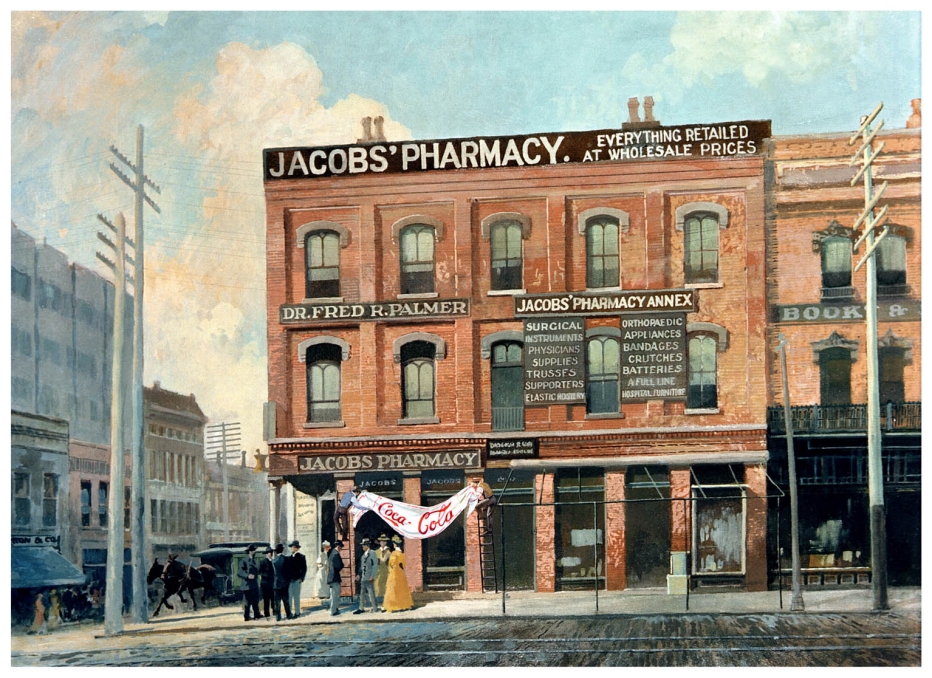
Pemberton registered his French Wine Coca nerve tonic. In 1886.It was initially sold as a patent medicine for five cents.Pemberton claimed Coca-Cola cured many diseases, including morphine addiction, indigestion, nerve disorders, headaches, and impotence. Coca-Cola was first sold in Jacobs’ Pharmacy in Atlanta.


Prior to his death in 1888, just two years after creating what was to become the world’s #1-selling sparkling beverage, Dr. Pemberton sold portions of his business to various parties, with the majority of the interest sold to Atlanta businessman, Asa G. Candler. Under Mr. Candler’s leadership, distribution of Coca‑Cola expanded to soda fountains beyond Atlanta. In 1894, impressed by the growing demand for Coca‑Cola and the desire to make the beverage portable, Joseph Biedenharn installed bottling machinery in the rear of his Mississippi soda fountain, becoming the first to put Coca‑Cola in bottles. Large scale bottling was made possible just five years later, when in 1899, three enterprising businessmen in Chattanooga, Tennessee secured exclusive rights to bottle and sell Coca‑Cola. The three entrepreneurs purchased the bottling rights from Asa Candler for just $1. Benjamin Thomas, Joseph Whitehead and John Lupton developed what became the Coca‑Cola worldwide bottling system.

The Coca-Cola bottle, called the “contour bottle” within the company, was created by bottle designer Earl R. Dean. In 1915, The Coca-Cola Company launched a competition among its bottle suppliers to create a new bottle for their beverage that would distinguish it from other beverage bottles, “a bottle which a person could recognize even if they felt it in the dark, and so shaped that, even if broken, a person could tell at a glance what it was

Among the biggest challenges for early bottlers, were imitations of the beverage by competitors coupled with a lack of packaging consistency among the 1,000 bottling plants at the time. The bottlers agreed that a distinctive beverage needed a standard and distinctive bottle, and in 1916, the bottlers approved the unique contour bottle. The new Coca‑Cola bottle was so distinctive it could be recognized in the dark and it effectively set the brand apart from competition. The contoured Coca‑Cola bottle was trademarked in 1977.

Coca-Cola was first served at the Olympic Games in Amsterdam in 1928.

In 1931 the company began placing Coca-Cola ads in popular magazines. Archie Lee, the D’Arcy Advertising Agency executive working with The Coca-Cola Company, wanted the campaign to show a wholesome Santa who was both realistic and symbolic. So Coca-Cola commissioned Michigan-born illustrator Haddon Sundblom to develop advertising images using Santa Claus — showing Santa himself, not a man dressed as Santa.

In 1960 it began to pour out drink into tin, which earlier was only for army. From 1997 coca cola produces 2 liter plastic bottles.

In 1982 new coca cola drink Diet Coke was invented, which does not contain sugar and is less caloric.

Nowadays coca cola is one of the most known brand in the whole world. It is sold in almost 200 countries. On an average one million bottles of coca cola are sold in the whole world in a day.

The role of social media in the branding process of Georgian companies

The role of social media in the branding process of Georgian companies

Internet addiction has extremely increased in the world and Georgia  is not an exception. Internet addiction increased the role of social media. Last results show that addiction on internet rate is more than 40% and the social networking site Facebook has more than 1000 000 users.

Georgian businessmen’ position is very interesting, whether they see social media as a great opportunity of effective communication with customers and if they appreciate its use in marketing activities.

Use of social media as a key tool of integrated marketing communication is becoming an important direction for the companies in Georiga. Social media research is useful for the companies who try to reach its target market and position its brand with less expenses.

The first function of social media is to inform and it is obliged to use all its resources. The blogger is some sort of mediator – it is the source of the information.

To succeed on the social media a company has to follow some principles:

    • Any step on social media has to have some goal.
    • Media administration has to be oriented on customer’s engagement.
    • The activity on social media has to fulfil customers’ concrete needs.
    • Informational posts about sales, new collection or special offers are accepted but it must not be the main content of the company’s web-page. As soon as the customer feels somebody cheating, it will never enter the company’s web-page again.
    • Activities on the social media have to be memorable, out of the ordinary, sometimes extra-ordinary. Company marketers claim that if a company wants to succeed on social media it has to delight customers.
    • Experts advise companies to not only generate brilliant ideas, but to implement these ideas in the simplest way. Social media in not a place for complicated things, simplicity, things easy for perception work there.
    • Directed to the concrete audience – there are many different people together on social media, that’s why when planning social media campaign the audience has to be determined.
    • The marketing manager has to determine the goal and not the outcome – marketer’s main task is to explain the goal to the social media expert and leave the ways of implementation down on him.
Business consulting future in Georgia

Business consulting future in Georgia

By activity on the international indicators in business Georgia  stands still 24. That makes it the burocreative country in the Caucasus. Increase in direct foreign investments which are generally directed to transport, construction, power, the real estate and production In recent years  don’t give the chance of development to a services sector to small and medium business, an in Georgia in the majority these types of business. one of problems consists in the insufficient capital which doesn’t give the chance to business development. today in the country in business many types of difficulties hundred meet there are no accurate and specific goals and the strategic development plan thus it functions inertia. there can be a problem in the management of the company, in absence of leaders, inefficiency of administrative structure, in the wrong distribution of function and duties. this loses motivation at personnel and leads to failure. in business of activity eats are defective financial management and profitability of sales decreases There there is no division of accounting and finance Gaps in financial expenses of time of the account, the wrong pricing. it will lead to discontent of the client and low profit that the most important of these problems many secret and novel for business and a management top, they interfere with development of the company hinder advance


Ketevan Asanidze


MCI Group supports youth activities

MCI Group supports youth activities

ELSA Tbilisi is organizing a school of law which is taking place in Tbilisi State University from 2 to 30 December, 2016.

MCI Group is supporting one of the sessions of the activity in which the students discussed business regulations.

The session implemented several contemporary moderation tools including Open Space Technology and also a simulation game “Fruit Market”. The beneficiaries held around ten discussions into small groups producing written resolutions as outcomes from the extensive problems we face in our daily basis.