Feb 10, 2019 | Business

Emotional Intelligence Through Data
Emotional Intelligence can be summed up as the ability to recognise and respond to how others are feeling at a particular moment in time. Without it, relationships tend to break down – and that’s the risk currently for the relationship between brands and their audiences on digital platforms.
People complain that brands ‘stalk’ them online and make them feel uncomfortable. Marketers either fail to realise how intrusive their use of online advertising has become – or choose not to care. Many believe that by targeting ads based on what they know about people’s behaviour they are being more relevant and more helpful. Unfortunately, their audiences don’t seem to agree. For that to change, marketers need to start asking harder questions of the data they are using – and what they are using it for.
Why brands’ use of data is stuck in ‘first date’ mode
Up to now, marketers have mined behavioural data with one goal in mind – who’s showing an interest in my category and how can I persuade them to buy from me? The result is that customers with very different existing relationships to that brand all get treated the same way and served the same direct response advertising: the shoppers being ‘stalked’ by ads for a TV get the same experience whether they are looking for a TV, bought that exact TV two weeks ago, or considered that TV but bought another one instead. People who’ve searched for broadband providers get bombarded with offers of high-speed connections long after they’ve signed up to an internet provider.
It’s one thing to keep encountering a brand in different places; it’s another if that brand keeps saying the same thing every time you encounter it – regardless of what your previous experience together might be. You can’t have a meaningful relationship with someone who just wants to keep reliving your first date. And by focusing their use of digital targeting solely on customer acquisition, that’s what brands are repeatedly doing. It’s significant that the more connected people are, and the more touchpoints that they encounter a brand through, the more this frustration builds.
From frustration to flashpoints: when campaigns get caught in the crossfire
Flashpoints occur when marketers set about to use a particular digital channel for one purpose – only to find a whole host of different people determined to use it for something else. When a business launches a clever brand campaign on Facebook only to find itself fending off very public complaints about defective products or customer service, it can’t afford simply to dismiss the perpetrators as ‘trolls’ or ‘saboteurs’. Its targeting has been guilty of treating people it already has a relationship with as if it’s just met them for the first time.
The solution isn’t to give in to audiences’ apparent desire for less use of data in targeting; it’s to integrate different forms of data into that targeting so that it can actually reflect the journey that a business and its target audience have taken together.
Why data quality is a thin excuse
In the recent past, a big portion of the blame for marketers’ one-dimensional use of behavioural targeting has rested with the nature of the data they have been dealing with. Data Management Platforms (DMPs) have provided information on the actions that a laptop or mobile phone has taken; they’ve been far less useful at identifying which phones and laptops go together – and who the people using each phone and laptop actually are. However, using the type and quality of data as an excuse is already starting to wear thin.
DMPs are increasingly able to amalgamate data from different devices using a process known as device mapping, to build a comprehensive picture of which devices belong to which people. When they construct a complete profile of someone’s digital behaviour, along with which phone and laptop they own, they are typically right at least nine times out of ten. The raw material essentially exists for marketers to start recognising the people they meet on digital platforms, recognising who they are, what their experience of the brand is, what products and services are relevant for them. However, translating this into the emotional intelligence that people demand from brands still requires several acts of commitment.
Working at emotional intelligence through data
It starts with a business’s own internal memory: tackling the siloes that get in the way of a coherent picture of each person’s relationship with it. It’s not uncommon for a major company to have hundreds of different IT systems that each contain relevant but essentially disconnected information about its customers. Connecting those internal systems so that they can talk to each other in meaningful ways is an intimidating task – but it’s an essential first step if businesses are to start using data on people’s online behaviour more intelligently. It’s noticeable that businesses that have been born in the era of Big Data (Dollar Shave Club being one obvious example) are far more effective at delivering intuitive experiences online. The lack of legacy siloes means that they start off with all of the relevant information about their customers readily accessible across the business.
 Different categories have different challenges when it comes to achieving emotional intelligence through data. Financial services brands are fairly advanced in detecting what each customer’s situation is – and what’s an appropriate thing to say to them at a given moment. Their problem lies in finding the right way to use that information without overstepping the mark and shattering already-fragile trust. FMCG brands on the other hand, have greater inherent permission for delivering emotionally intelligent experiences – but far less joined-up data to base those experiences on.
Getting creative about the data that makes a difference
This is where a creative approach to generating relevant data becomes vitally important. It could involve interactive campaigns and rewards programmes that give people a reason to identify themselves; it could involve launching new content services and platforms to which they might want to subscribe. Businesses need their own view of their customers and potential customers if they are to safeguard their relationships with them – and creative strategies focused on building that view will become increasingly central to marketing.
The benefits of this owned data aren’t limited to relationships with people the data actually refers to. Through look-alike modelling brands are increasingly capable of identifying others with similar situations – even with similar past experiences of the brand. Emotional intelligence can be extended even to those with whom their prior contact has been only fleeting.
It can also be integrated across offline environments, as well as digital ones. The credit card company who knows its customers should not only be able to use data to detect when somebody is planning a trip abroad and suggest tailored services to smooth their experience; when that person calls to enquire further, it should recognise the number, know who is calling and why. When the person flies abroad, it should know to automatically clear their credit card for use in the country to which they are travelling. These are the kind of tangible demonstrations of value that people claim they need from brands. They can only come from a commitment to self-knowledge and emotional intelligence through data.

Feb 10, 2019 | Business
If you’ve gone a month without using cash, you might be amenable to a cashless society. Going “cashless,” or at least reducing large denominations from circulation, is an increasingly popular policy push in certain economic circles. Crime and corruption supposedly suffer in a cashless world. Few criminals are likely to pay someone to smuggle illegal goods using a check or credit card as payment. As Kenneth Rogoff writes in the Wall Street Journal, “In the underground economy, cash plays a big, well-established role for which there is no remotely perfect substitute in terms of liquidity and universal acceptance.”
Some argue that nefarious activities will continue even in a cashless society, because criminals would simply draw law-abiding businesses into their web. Criminals could theoretically coerce a business, through threats or intimidation, into writing them a check for supposedly legitimate services, if cash were unavailable. While certainly possible, this strikes me as more problematic than paying with a suitcase stuffed with greenbacks. India, which recently removed large denomination rupee notes from circulation, is a fertile testing ground for these theories. While the jury’s out as to the effects on crime, corruption certainly hasn’t stalled out; instead of cash, now land, houses and luxury watches are the preferred bribery currency.
Why are governments around the world so interested in reducing cash transactions? Because they would like to tax those transactions. When people and businesses deal completely in cash, it’s difficult for the government to know if any tax is due, much less the amount to be collected. And in many developing countries, where tax compliance is low and cash usage is high, taxes lost to legal but unreported transactions represent the single most important fiscal issue.
While the argument for a cashless society might make sense for many emerging economies, it’s less relevant here in the United States. Apart from the fact that Americans are among the most honest taxpayers in the world, some seven percent of our nation’s adults have no bank account and conduct all financial activities using cash. Going cashless might dramatically impair lower income and on-the-brink Americans’ ability to get by. Farm workers, for example, are often paid in cash and many times purchase all their services, including paying their rent, with those same dollars.
Additionally, some folks just want privacy when they buy something. The purchases or expenditures may be completely legitimate, but they simply would rather keep the transaction to themselves. In any case, if we do end up cashless, we might have to rethink the phrase “paper trail.”

Feb 10, 2019 | Business

Concerns about non-users being maladjusted are unfounded and unfair.
Recent news stories have suggested that employers may be reluctant to hire people without a Facebook profile on the grounds that Facebook usage has become so common that not having an account is seen as somehow abnormal. This concern appears to have been compounded by a lurid report in a German newspaper that alleged mass killers James Holmes and Anders Behring Breivik did not have Facebook accounts, leading to the rather hysterical conclusion that not having an account “could be the first sign that you are a mass murderer.”
Is there any substance to these concerns? Research suggests that although not having a Facebook account might be unusual nowadays it is hardly cause for alarm. Indeed, the fact that someone has an account is hardly a credential of mental health either, and may be associated with its own problems, admittedly minor ones.
An Australian study examined personality differences between people with and without Facebook accounts (Ryan & Xenos, 2011). People with an account were found to be more extraverted and narcissistic, whereas those without an account were found to be more conscientious and shyer. They found that those without an account experienced more social loneliness, but those with an account experienced more family loneliness. They also looked at time spent on Facebook per day among users and found time spent was positively correlated with neuroticism and loneliness and negatively correlated with conscientiousness. All of these effects tended to be small. These findings seem comparable to those of a study comparing users of Facebook and Twitter respectively which found that people who preferred Facebook tended to be more extraverted and sociable compared to Twitter users, but also more neurotic and less intellectually oriented.
What might this suggest to a potential employer concerned about whether an applicant has a Facebook account or not? On the one hand those who have an account will tend to be more outgoing and less shy, which would be important in jobs involving a great deal of face-to-face interaction. On the other hand, those who do not have an account tend to be higher in conscientiousness, suggesting they are more likely to be hard working, persevering and achievement oriented. In fact, conscientiousness has been found to be one of the strongest personality predictors of job performance across all professions. Furthermore, the more time a day a person spends on Facebook, the less time they are doing actual work and the more time they are likely to be whining about their personal problems. People who do not have a Facebook account also tend to be somewhat less narcissistic, that is, less egotistical and exhibitionistic. Employers concerned about someone not being on Facebook might instead want to consider the desirability of hiring applicants who think that “everything is about me” and who lack a strong work ethic. Narcissism is also a member of what personality psychologists call “the dark triad” of personality, along with such antisocial characteristics as psychopathy and Machiavellianism (Jakobwitz & Egan, 2006). Although there is no evidence that Facebook usage has anything at all to do either way with being a homicidal maniac, the fact that narcissism has a known relationship with antisocial traits would seem to suggest that people who do not have Facebook accounts are actually less likely to commit atrocities. All of these considerations should of course be tempered by the fact that all of the effects reported by these research studies have been small in size. So, looking at things scientifically, knowing that someone does or does not have a Facebook account is not likely to be a strong indicator of the character of the person, and is hardly cause for panic either way.

Feb 10, 2019 | Business
MCI cooperates with EBRD Bank, which funds 50-60% of our services.
ebrd.com
Feb 10, 2019 | Business
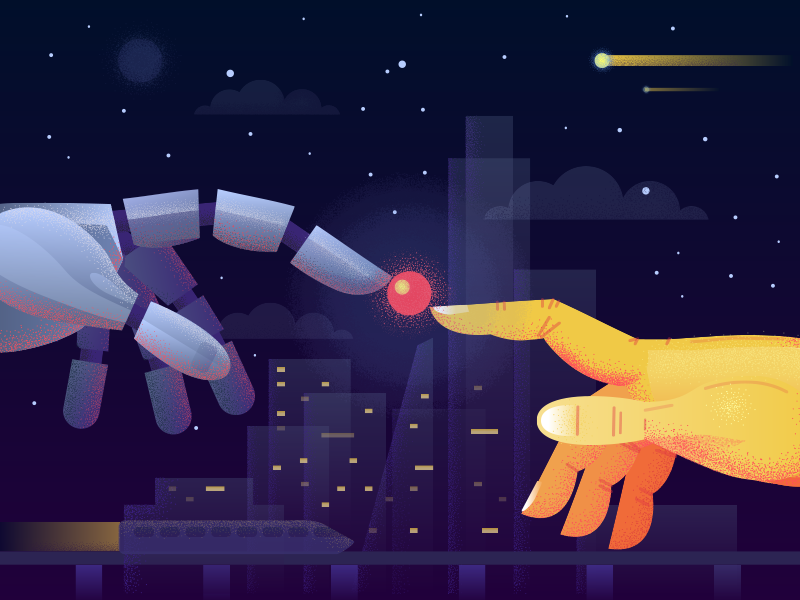
It’s no secret robots are a growing threat to the human workforce. The World Bank estimates 57 percent of all jobs could be automated within the next 20 years. So how can humans stay one step ahead of the computers? By emphasizing something AI can never replicate: good old-fashioned human curiosity.
According to new research by SurveyMonkey, most employers don’t put a high value on curiosity now, but those that do stand a greater chance of surviving in the future.
The Great Divide
SurveyMonkey’s results show that many company leaders believe curiosity is key to their own success. Nearly half (49 percent) of American business leaders say curiosity is directly tied to the ability to make more money. But people lower on the ladder don’t necessarily feel the same way – only 22 percent of people believe in the financial rewards of a curious mind.
What’s interesting is that for all the talk of boundary-pushing among the higher-ups, few bosses are actually inspired by one another. Just 17 percent of business leaders are inspired by their peers, while 31 percent of more junior workers are inspired by people at their level.
So what’s going on here? How can junior workers see the possible financial benefits of curiosity and how can managers find the inspiration that their subordinates have?
It all depends on how your workplace treats questions. 30% of the workforce say they don’t get real answers. 28% fear “looking stupid” or others’ reactions. 42% of millennials fear how they’ll be perceived when they ask questions.
Riddle Me This
SurveyMonkey CEO Zander Lurie says company culture determines the openness to new ideas. “Speaking up in a meeting with a question that challenges authority or the status quo might be intimidating if curiosity isn’t encouraged,” Lurie said. “If your organization skews towards a Culture of Genius, then you’re not going to generate the collaborative and curious questions from more junior teammates. When some minds are recognized or rewarded as inherently more brilliant than others, the ‘have-nots’ will be reluctant to share opinions and ask questions as a result. To foster a Culture of Curiosity where these fears don’t exist, leadership needs to make asking questions part of an organization’s culture. Celebrate the curious insights the questions beget.”
As for those robots coming to sweep humanity aside, Lurie says leaning on our natural curiosity will give us the edge in the marketplace. “I could imagine that in the near future it becomes a standard practice for companies to use some type of a Curiosity Quotient score and make it part of hiring requirements, annual performance reviews, promotions, and financial rewards, all of which can help businesses stay more competitive in the market and gain unique advantages,” Lurie said. “We aren’t going to beat the robots at work ethic or attention to detail — so we better stay curious!”
Feb 10, 2019 | Business
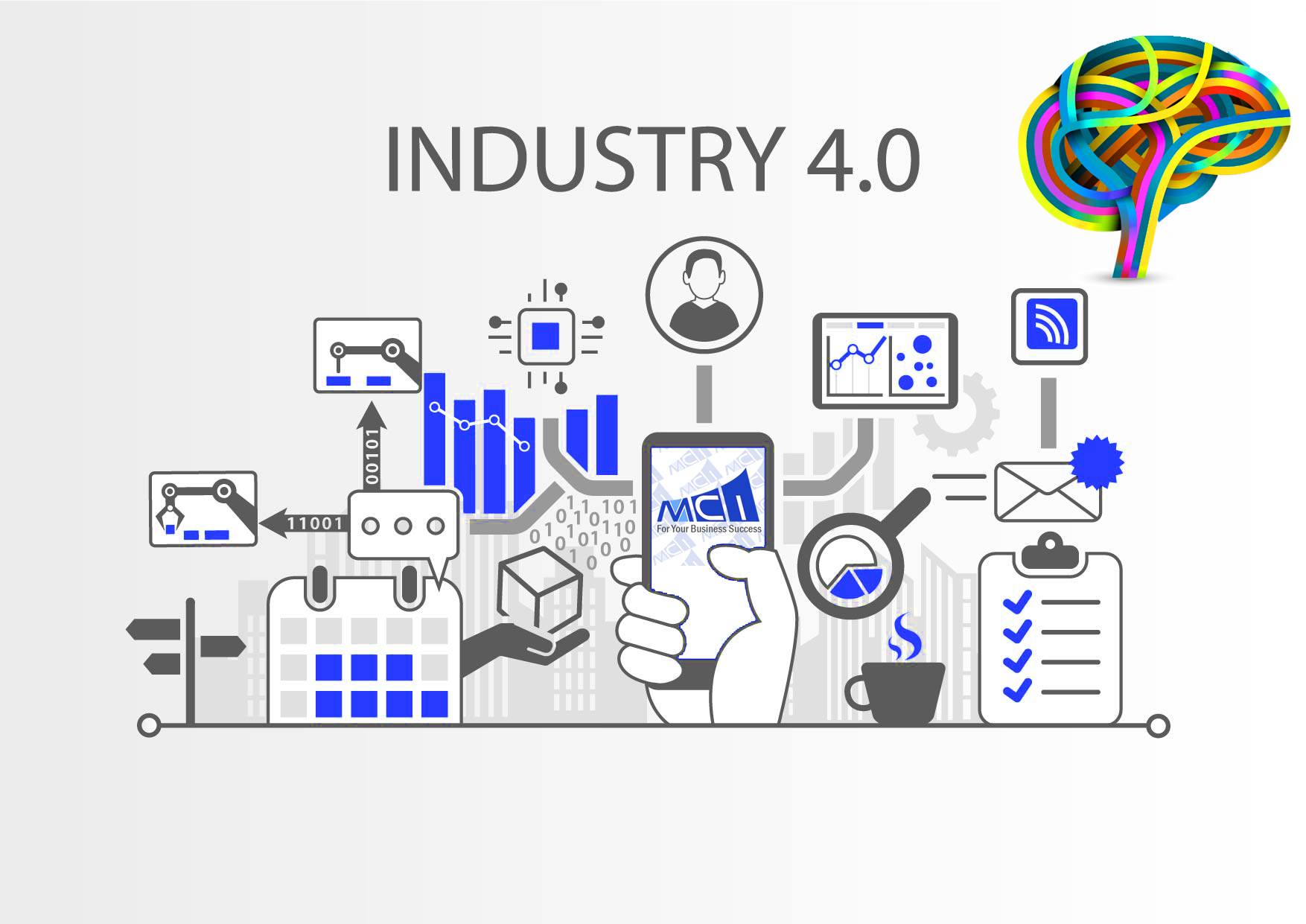
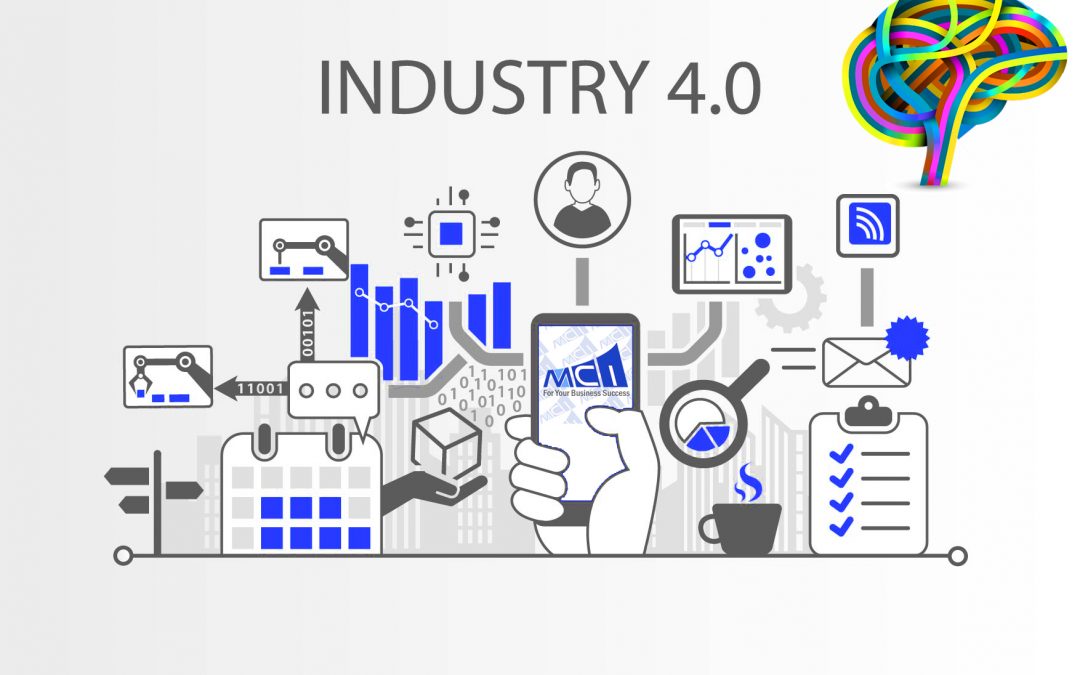
What is Industry 4.0?
1⃣ The first industrial revolution we can call industry 1.0 is the mechanization of human actions.
2⃣ Second – electricity, conveyors and mass-production.
3⃣ The third revolution involves computer ere, automation, creation and development of robot techniques.
4⃣ The fourth industrial revolution known as “Industry 4.0”, is derived from the third stage which is full with innovative technologies.
The main goal of this revolution is the symbiosis of computer technology, artificial intelligence and automation.
The famous writer-fantasies of the twentieth century describe Era where the main function of humankind is to manage robots and artificial intelligence. This is the promise of 4.0 industry today.
➡ For example, take any type of factory or production that perfectly fits 4.0 models:
** All actions of this factory are automated
** The auto-monitoring system was introduced
** Machines are run entirely by computers
** Computers can learn, analyze the situations and make optimal independent decisions for the enterprise
✔ Therefore, any business has to follow the innovations in his field, timely introduction of these innovations, develop a new model of competitiveness and timely adaptation to these changes.